
Form Meets Physics: The Mid-Century Mastery of Ben Seibel Bookends
Like many mid-century modern designs, everyday functional objects frequently receive the high-art treatment. Among the era's most distinct examples of this philosophy are the brass and bronze bookends designed by Ben Seibel for producers like Jenfred Ware and distributed through Raymor during the 1950s and 1960s.
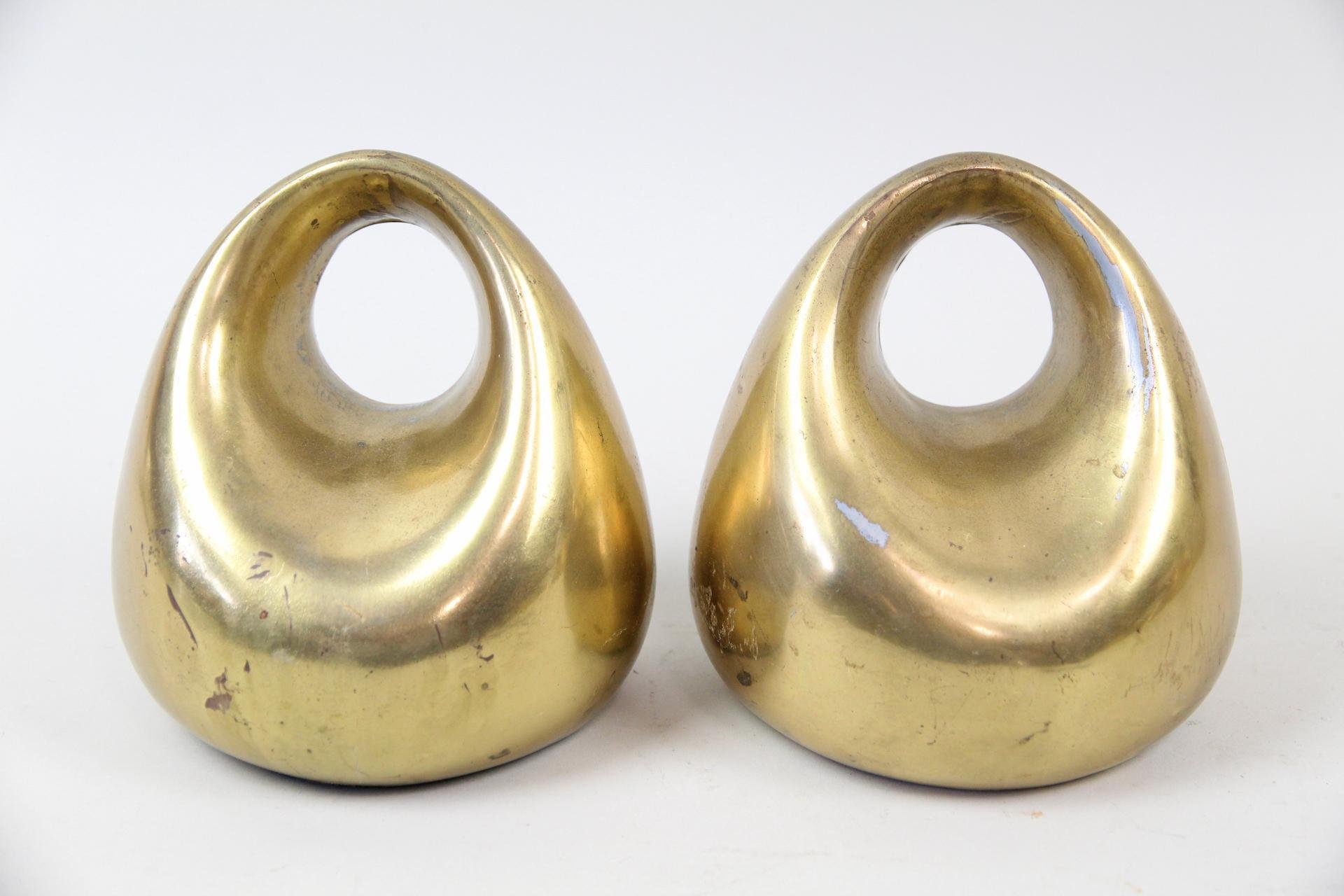
Rather than treating bookends as utilitarian objects, Seibel approached them as sculptural statements that solved a structural problem.
Ben Seibel (1918–1985) was born in Newark, New Jersey. Before turning to industrial design, he studied painting under Louis Schanker, sculpture under Leo Amino, and architecture at Columbia University. After serving in the Army Air Force during World War II, he completed his education in industrial design at Pratt Institute. Seibel explicitly credited his early training in sculpture as the single most influential force on his approach to design—explaining why even utilitarian items like bookends, butter dishes, and coffee carafes had an organic, three-dimensional presence. His overall design ethos combined clean, architectural lines with organic, fluid shapes—a marker of American Modernism.
When Seibel considered bookends, he bypassed conventional heavy cast-iron blocks in favor of geometric clarity and abstract forms. Pieces like his triangular bookends and his famous "flame," "stirrup," and "ladder" bookends use heavy brass and bronze plates that demand attention on a shelf.
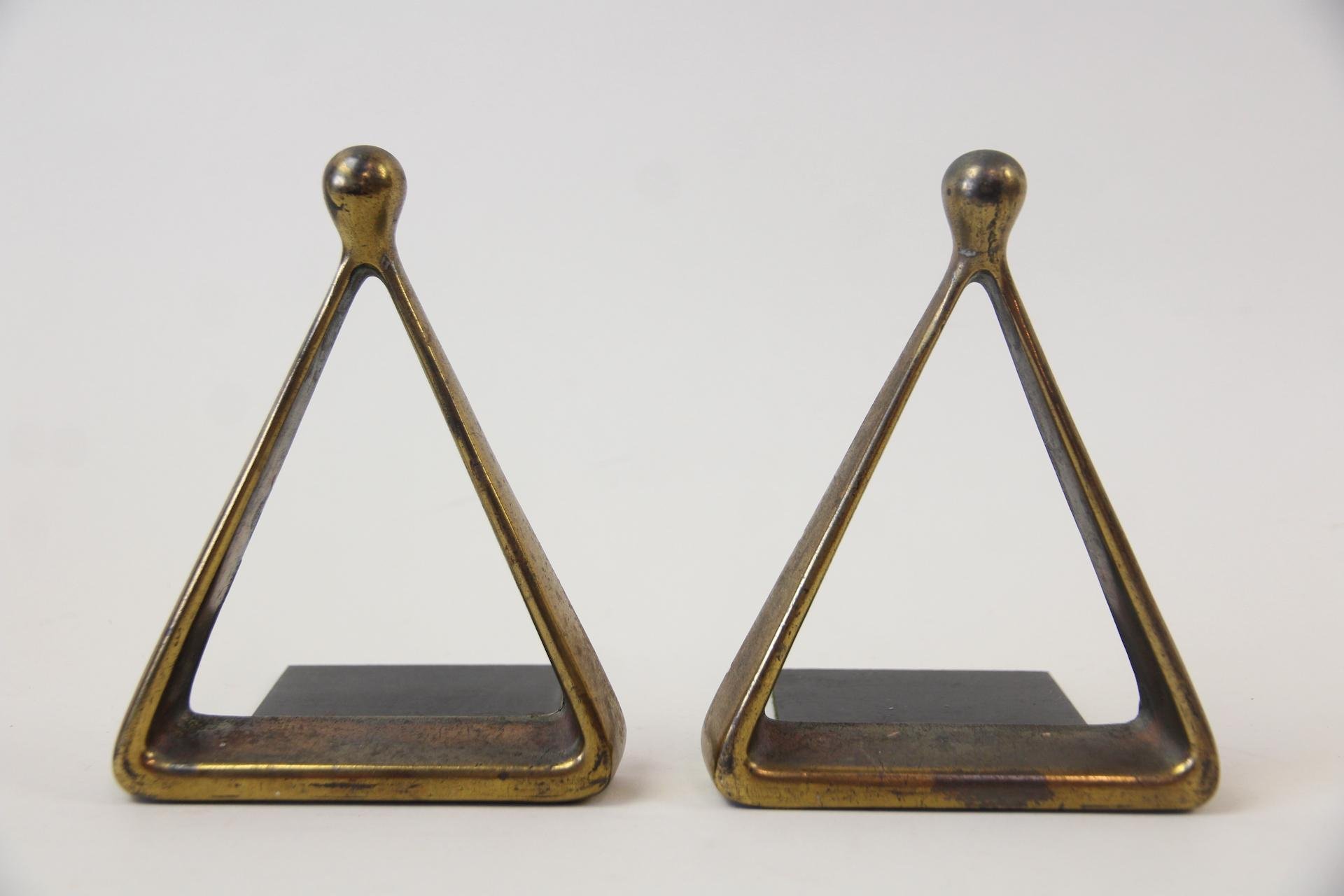
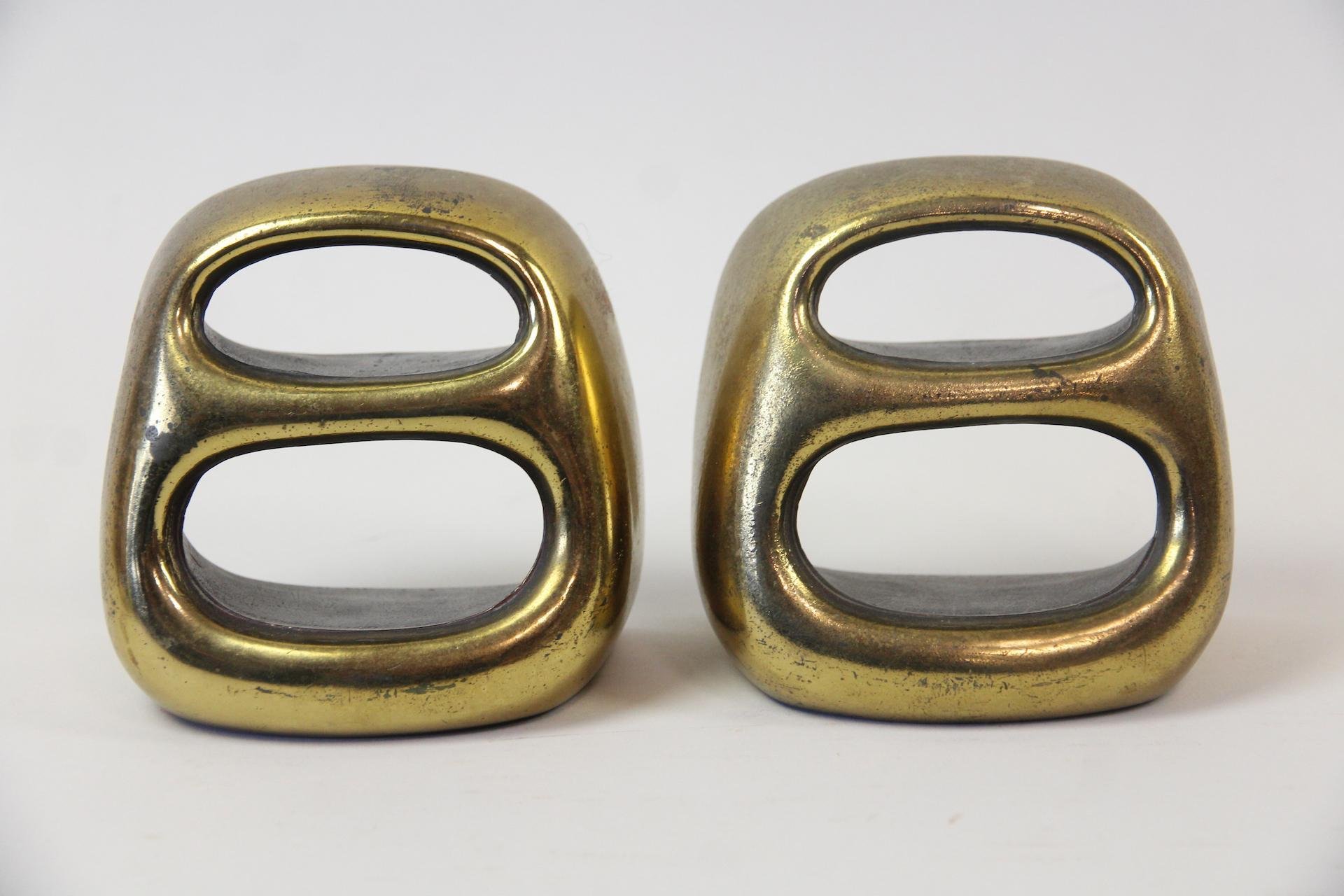
A bookend must counteract the lateral friction and leaning weight of an entire row of heavy books. Seibel’s designs achieved stability not through bulk alone, but through geometry, distributing weight evenly across a sturdy base while maintaining a visually lightweight, airy profile.
Crafted primarily from brass, bronze, and copper finishes, these pieces were built to weather time. Over the decades, unpolished vintage brass develops a rich patina, making surviving examples highly sought after.
In post-war homes, open-plan living meant bookshelves were often visible from all sides. Seibel’s architectural triangles and abstract silhouettes function just as well as standalone art objects.